What is Joint Venture?
In Massachusetts, a person may be convicted of murder even if they never killed or intended to kill anyone. This is because of the joint venture theory, which holds a person liable for murder if they provided aid to—or participated in a felony with—another person who killed someone. The joint venture theory expands the net of criminal punishment without promoting healing or accountability. Here’s how:
Disproportionate Punishments: The joint venture theory violates the basic legal principle that a person should be held accountable for their own actions and intentions. Even worse, the joint venture theory allows people with lesser culpability to receive harsher sentences than the person who actually killed someone due to unequal charging and plea-bargaining practices.
Wrongful Convictions and Racial Bias: Joint venture convictions are susceptible to error and bias. Research suggests that decision-makers may be more likely to find people of color responsible for the behavior of others, but White people responsible only for their own conduct. Data reflect these dynamics: most joint venture prosecutions are concentrated in Black and brown communities. Since 2003, 110 out of the 117 cases prosecuted in Suffolk County under the joint venture theory came out of Dorchester (55), Roxbury (22), South End (18), and Mattapan (15).
No notice to the accused: The joint venture theory allows prosecutors to bring murder charges without telling someone whether they are being prosecuted as a principal or joint venturer. This means that people can go to trial not understanding what exactly they are being accused of, violating the basic notion of due process.
Ignores Power Dynamics: The joint venture theory criminalizes survivors of abuse who may be proximate to—or coerced to participate in—their abuser’s violent conduct. Similarly, the joint venture theory punishes young people for the acts of those around them, even though young people are less able than adults to remove themselves from dangerous situations. Sentencing someone to death-by-incarceration for the acts of their abuser does not improve public safety—it only fuels cycles of violence and harm.
Barrier to Healing and Accountability: The joint venture theory holds people accountable for an act they did not commit (murder) and leaves little room for a person to take accountability for what they did do. This gets in the way of restorative and transformative justice practices that can promote healing for those who have lost loved ones to violence.
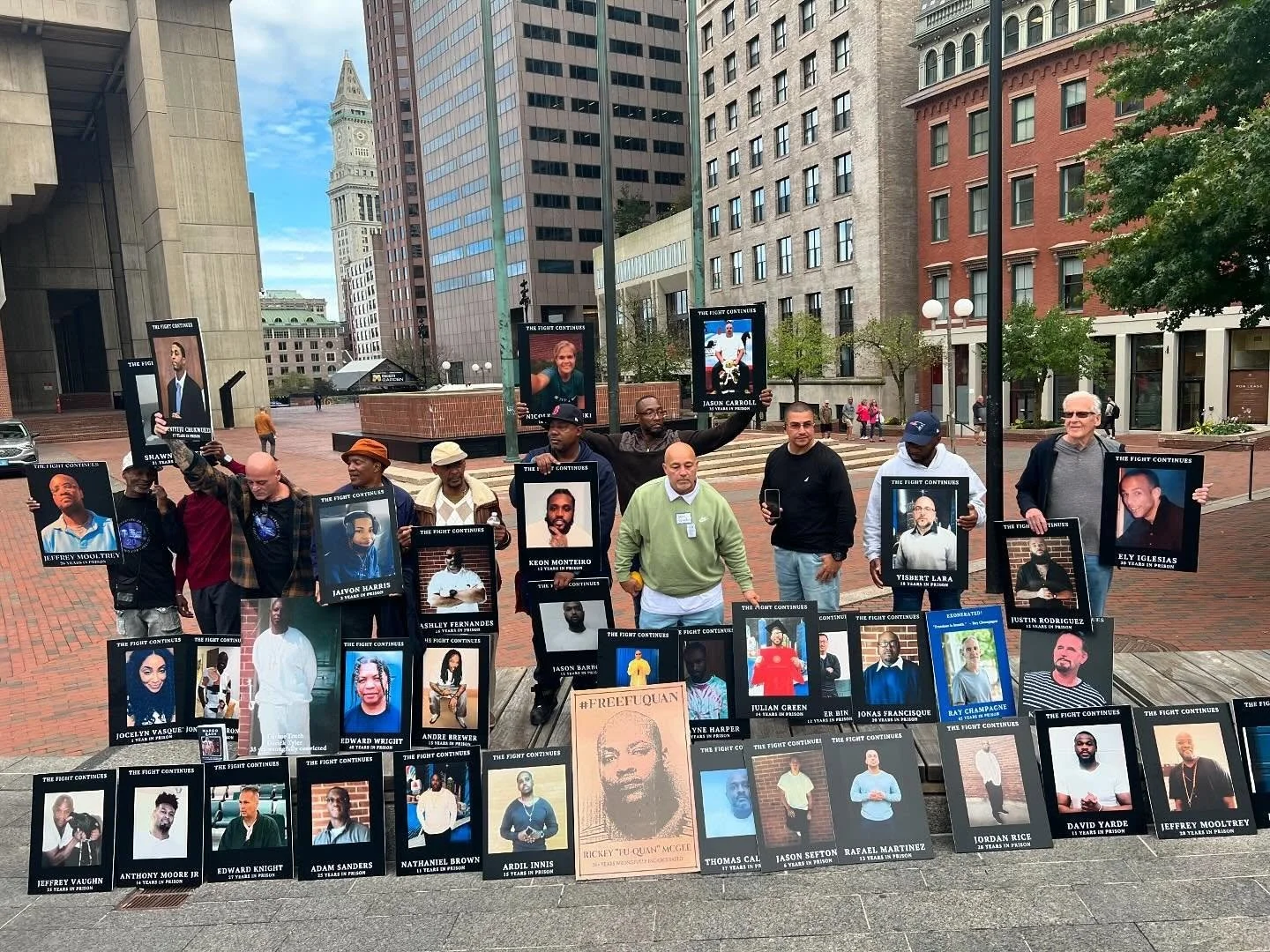
10 things to know about Joint Venture in Massachusetts
Did you know?
That in Massachusetts, most people do not know what a Joint Venture is, including lawmakers?
That under the Massachusetts Joint Venture theory, most joint venturers are not made aware of this theory until the day of trial which violates their due process, and cripples their preparation for defense?
That a Joint Venturer (not the actual killer) is still being taken to trial for murder without the principal (the actual killer) being charged, most often there is no identity of the "principal" person(s)?
That in some cases when the principal perpetrator (the actual killer) is charged with murder and go to trial, they end up with less time than the joint venturer?
That the average citizen who is called for jury duty lacks the basic understanding of the law that governs a joint venture conviction, which leads them to find men and women guilty of joint venture (murderers) that they never committed, and sentence them to life in prison for a murder they did not commit?
That Joint Venturers get charged with murders that they had no knowledge of?
That the principal perpetrator's intent (actual killer intent) falls on the joint venturer?
That the joint venture theory disproportionately applies to people of color and citizens in our low-income community in Massachusetts?
That there are many men and women in state prison right now serving time for murder, as a joint venture while the governments acknowledge that these individuals aren't the actual killers, and that the actual killers are still free, and roaming the Commonwealth of Massachusetts.
That in 2018 and 2021, California passed SB 1432 and SB 775, which erased a total of 11,353 years from individuals' sentences that found themselves incarcerated for murderers that they did not commit, which allowed California to save TAXPAYERS AS MUCH AS 1.2 BILLION IN PRISON COSTS.
Who is impacted by joint venture theory?
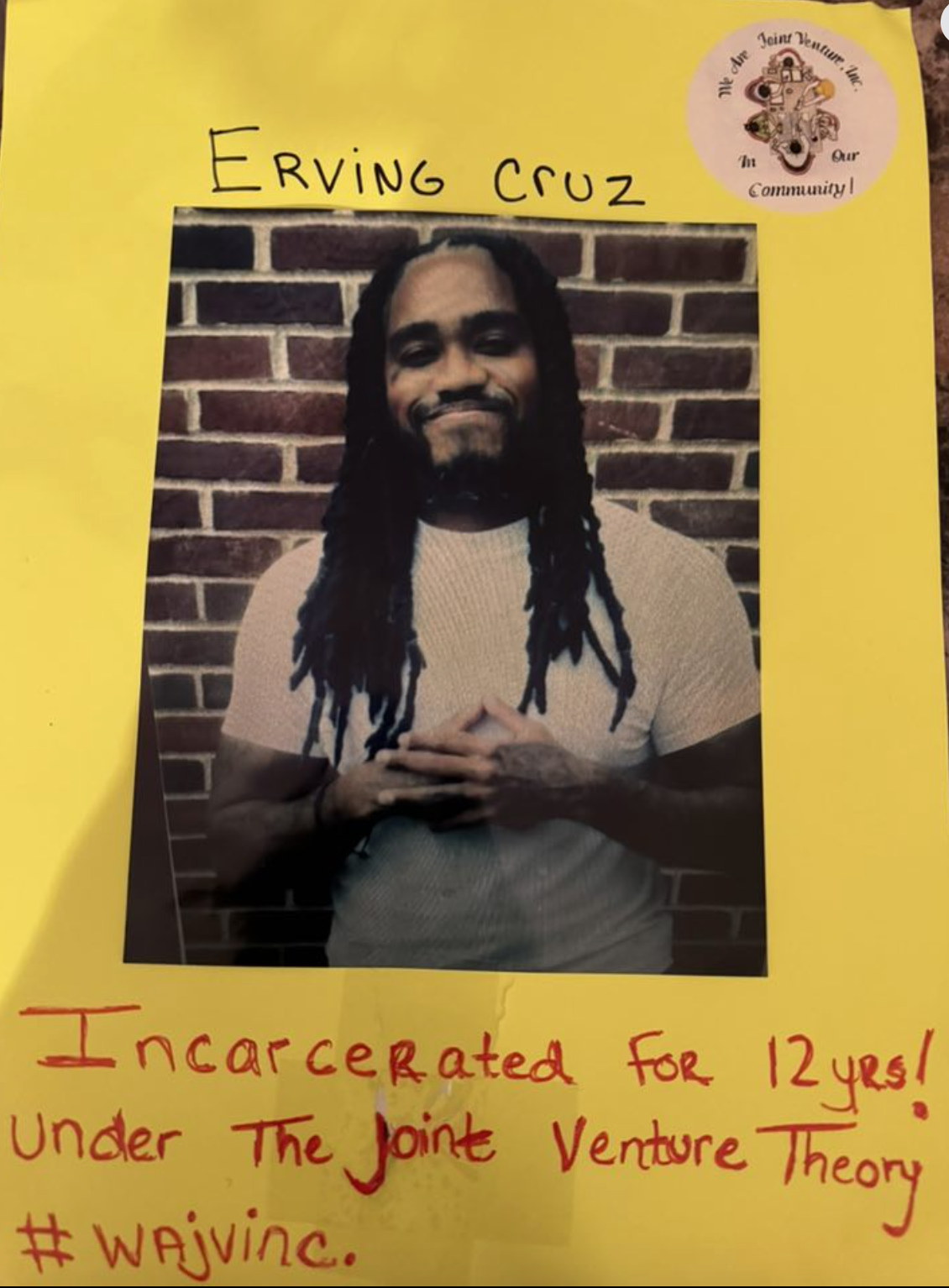
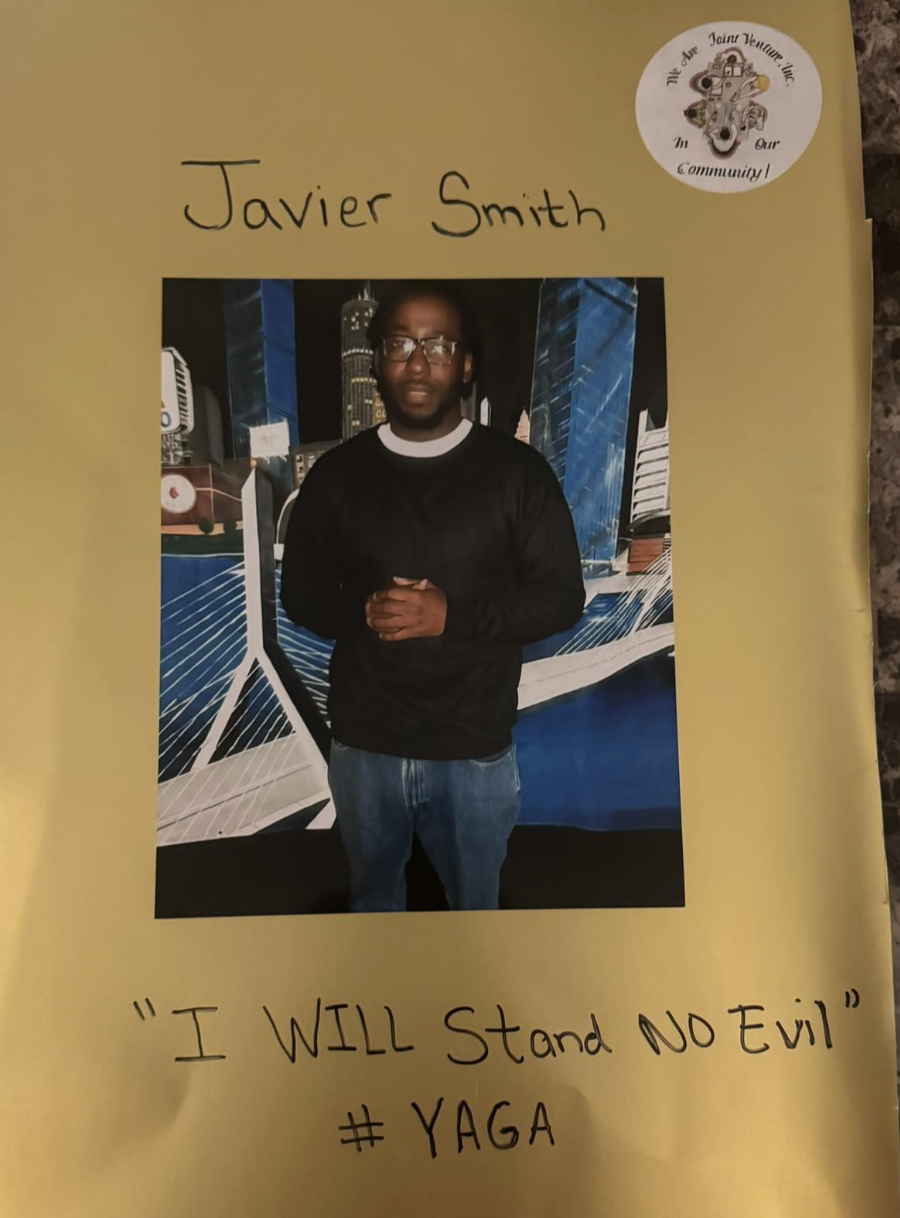
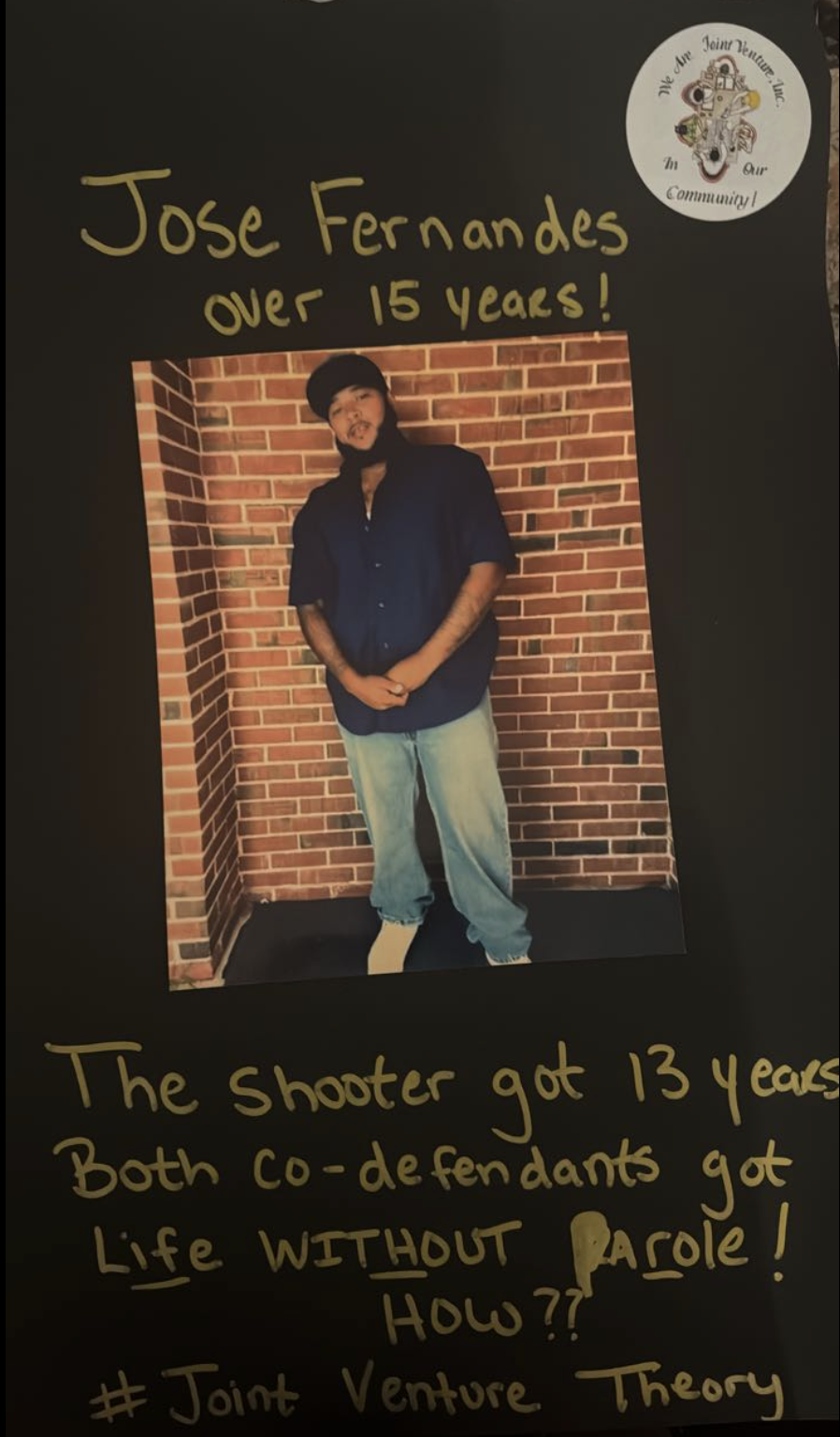
Hundreds of people in Massachusetts, thousands across the nation, and even more across the world.
-
![]()
Irving
-
![]()
Javier
-
![]()
Jose
-
![]()
Omar
-
![]()
Jason
-
![]()
Miguel
-
![]()
Cleveland
-
![]()
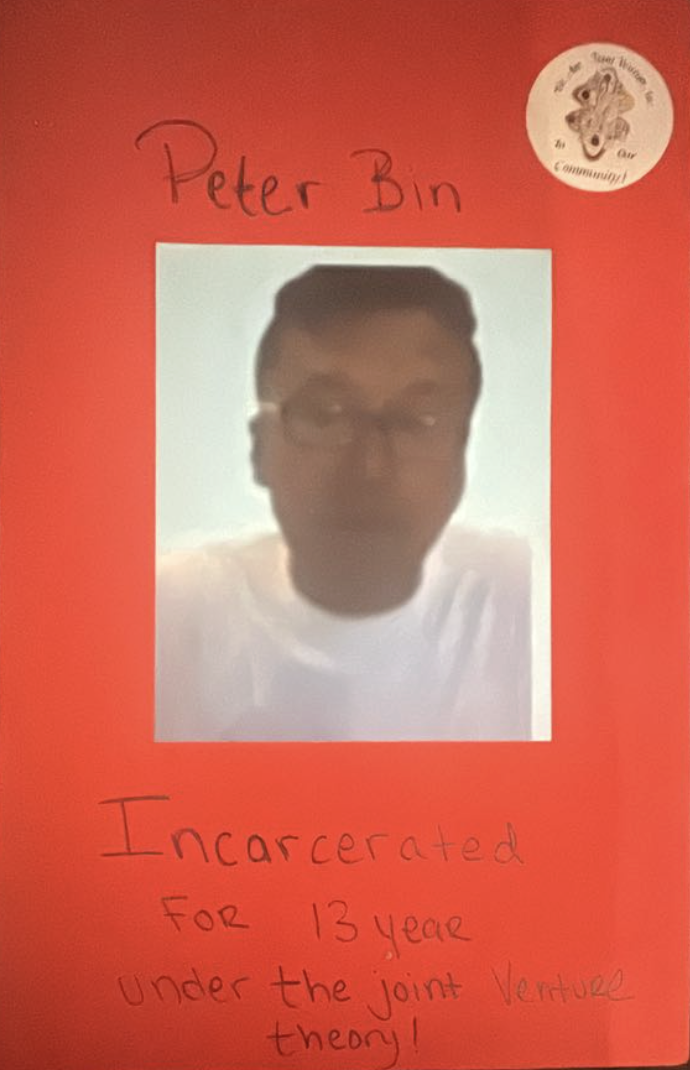
Peter
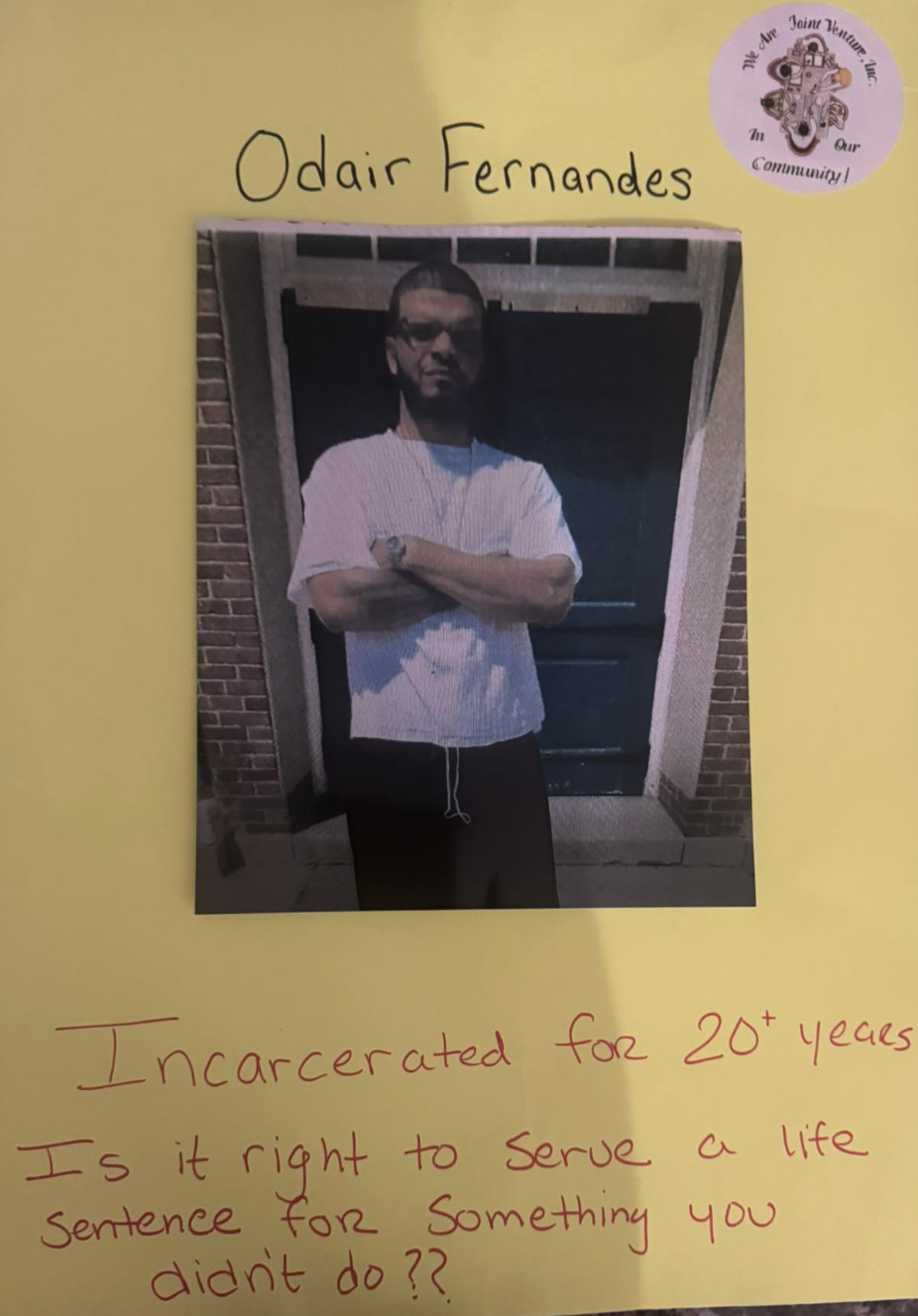
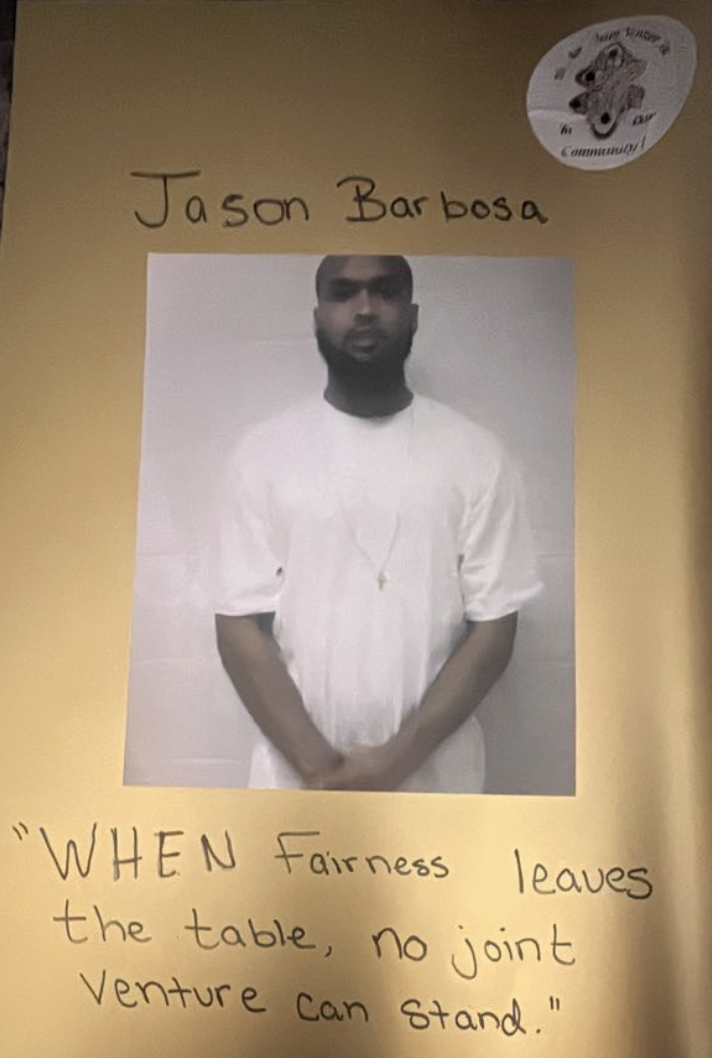
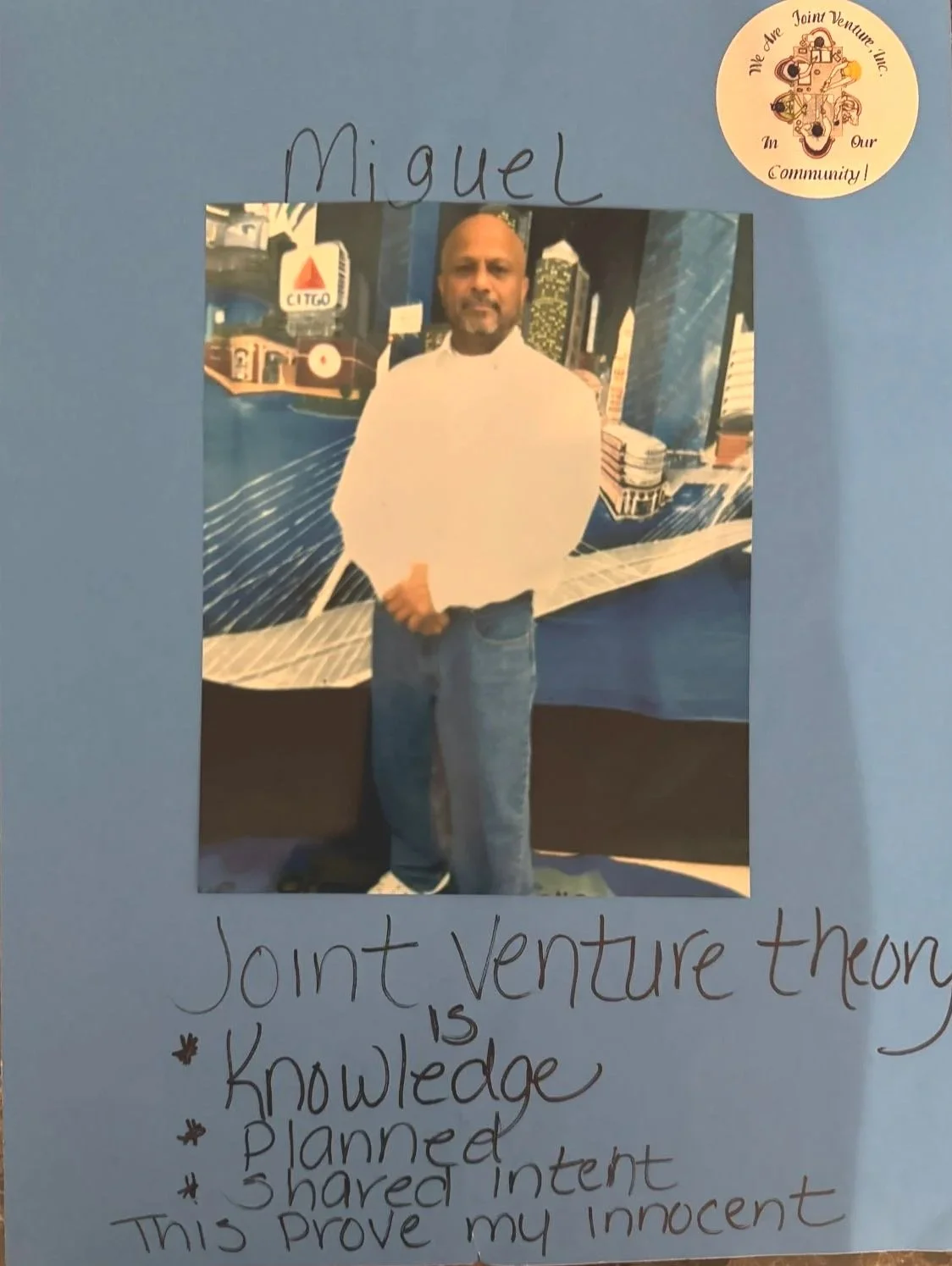
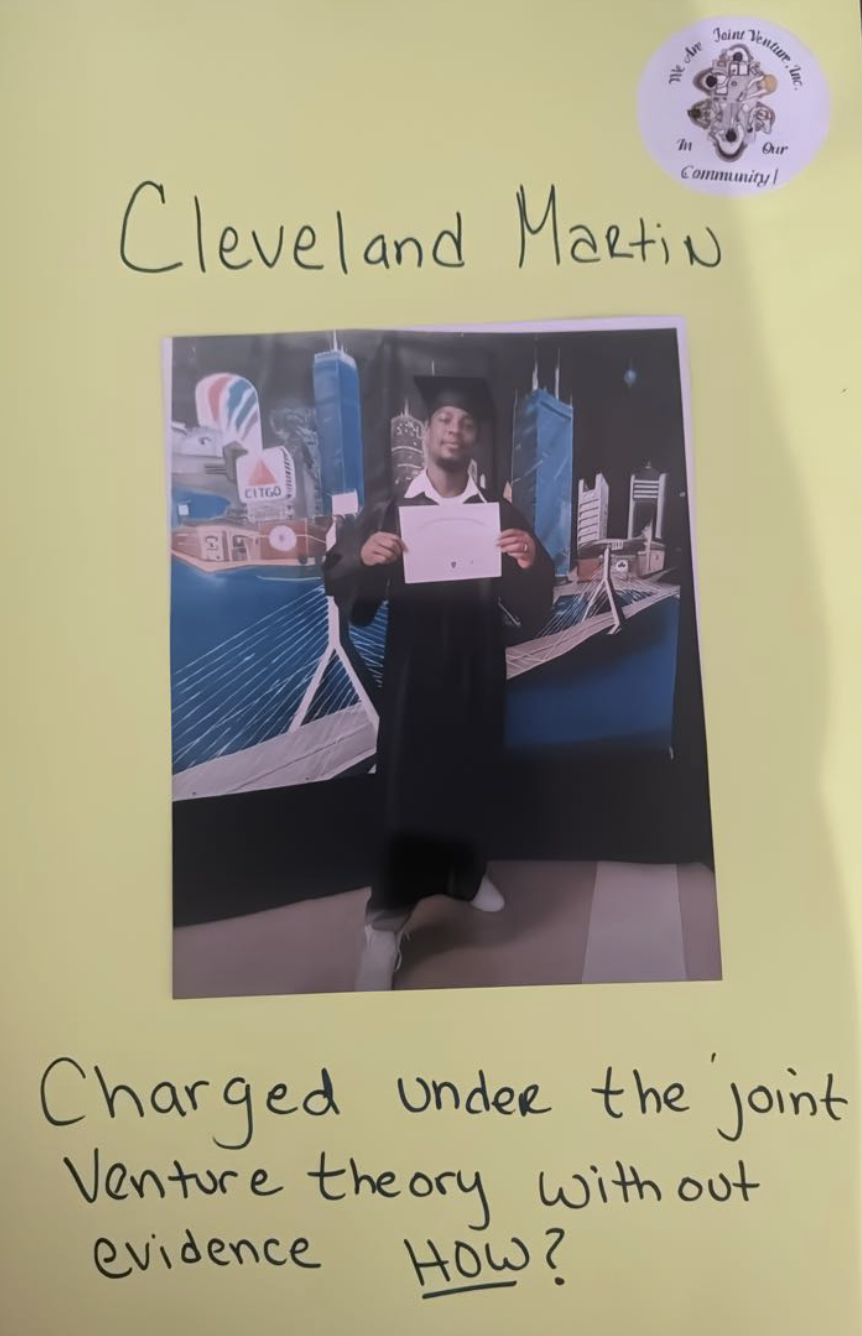
Check out Caitlin Glass & Julian Green’s new article published by the Minnesota Law Review:
Joint Venture Cases in Massachusetts
1973-2023
Massachusetts does not maintain data on the number of joint venture convictions or the racial demographic breakdown of the population serving life and life-without-parole sentences for murder under the joint venture theory. However, the group We Are Joint Venture, Inc. reviewed 51 years of Massachusetts Supreme Judicial Court opinions from joint venture murder cases and found that the majority of cases are concentrated in urban communities with primarily Black and Brown populations.
This data, illustrated below, aligns with research suggesting that joint venture prosecutions are especially susceptible to racial biases. For example, one empirical study found that decision makers may be more likely to find people of color responsible for the behavior of others, but White people responsible only for their own conduct.
Suffolk
243 cases
Middlesex
94 cases
Plymouth
80 cases
Hampden
77 cases
Essex
50 cases
Worcester
43 cases
Norfolk
36 cases
Bristol
33 cases
Barnstable
16 cases
Berkshire
12 cases
Franklin
8 cases
Hampshire
2 cases
Joint Venture Across the Globe
While some countries have abolished joint venture laws, others continue to enforce them. Learn more about our partners working to change these laws and advance justice in countries around the world.
Check out Joint Enterprise Not Guilty by Association.